
Table of Contents
Akaroa French Landing – the ‘Romantic’ Race for Akaroa 1840
There has always been a romantic interpretation of the Akaroa French Landing, as the only official French (government backed) settlement in New Zealand and the very first European town in the South Island, Akaroa has some remarkable history.
Akaroa’s Frenchness has been hyped up to suit the tourism marketability of the town, but the French settlement of Akaroa was very real and the French settlers stayed and had many children whose descendants still live there today. The Lelievre Family alone had over 7800 descendants at last count in 2024.
The Akaroa French Landing was also romanticised because the British who wanted to demonstrate their superiority, having ‘won the race’ and demonstrated sovereignty over the South Island before the French settlers landed in Akaroa.
This was particularly evident in the 1898 Queen Victoria Diamond Jubliee when the Britomart Monument was erected to grand ceremony on the Britomart Memorial Historic Reserve, a nationally significant historic site.
’Rule Britannia’ was again celebrated in the 1940 New Zealand Centenary celebrations, to mark the first 100 years of New Zealand as a young country within the British Empire, on which the sun never set.
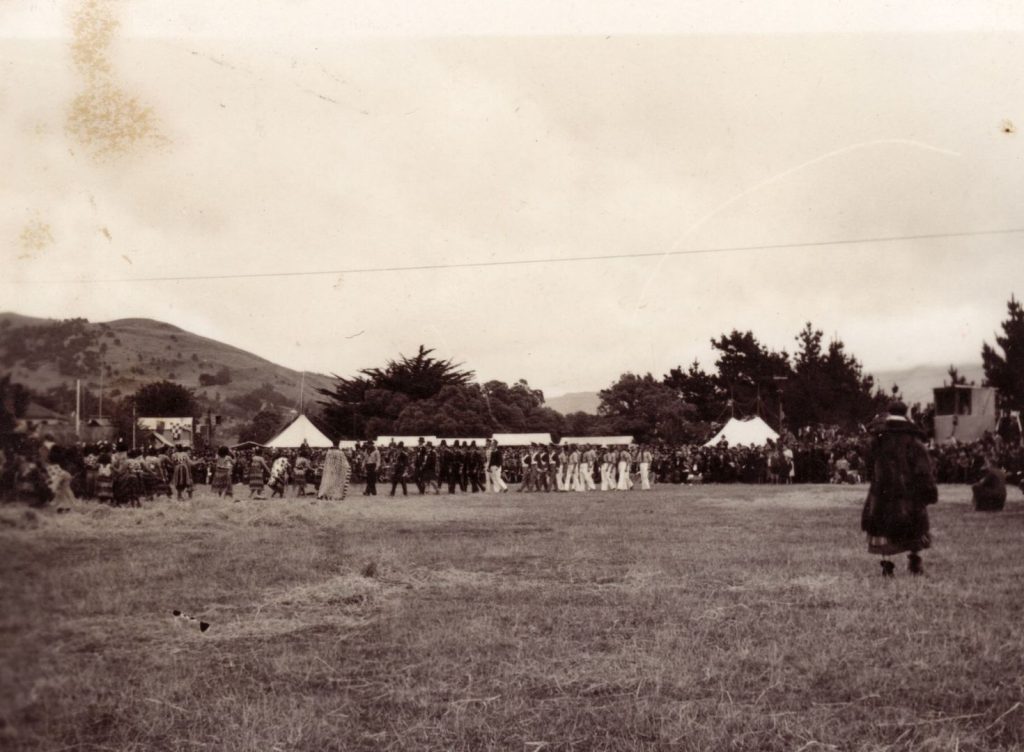
Much of this was about finding a national identity and celebrating the ‘good race relations’ that New Zealand was so proud of between a ‘bicultural’ nation, the British and the Māori. Of course minorities like the French, German and Belgium settlers onboard the Comte de Paris have largely been overlooked in this national narrative.
But the 1940 Centenary was also a chance for Māori to protest to the government the land claims and breaches of the Treaty of Waitangi. And the Akaroa Celebration was no different.
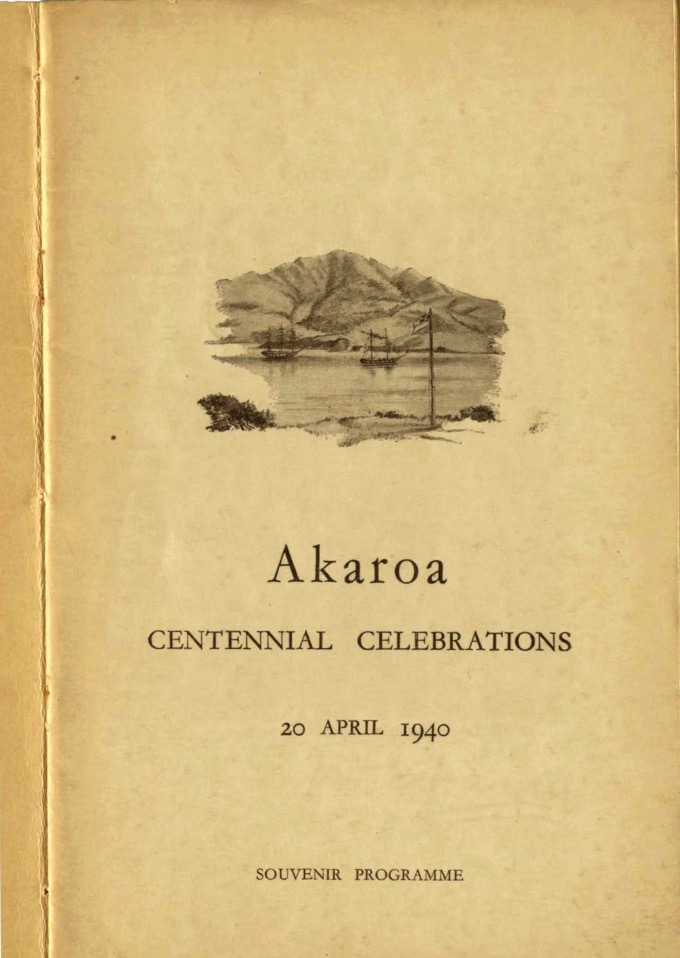
Akaroa French Landing – 1940 Centenary Celebration
Akaroa was chosen, due to the ‘romantic’ story of the HMS Britomart racing the French to demonstrate government before the French claimed the South Island for their own. A little prior to the 1940 celebration Buick had published a ‘correction’ in 1928, that the HMS Britomart did not ‘claim’ sovereignty in Akaroa as was the popular belief, but demonstrated government. People In 1940 understood the significance of this event, and also of the Brig Elizabeth incident and intertribal warfare leading up to the Treaty, both of which were published in a booklet (see below).
Akaroa had been selected as the ‘Premier Location’ for the South Islands Centenary Celebrations, due to the HMS Britomart racing the French naval ship the L’Aube. Of course it wasn’t really about two ships ‘racing,’ that is a little naive and simplistic, rather, this was a race between two empires, that had just fought the Napoleonic Wars, and the American Revolutionary Wars and Seven Years War prior to that.
This was a race for the first French Government backed settlement in the South Pacific. After Akaroa failed for the French, they went on to Tahiti no less. In fact, French law was still observed in Akaroa until 1846 and the French Naval Port remained until 1846 as well. Not an insignificant thing.
There had been some confusion, because the Britomart Memorial had been incorrectly inscribed that the British had ‘claimed’ sovereignty in Akaroa, which they had in fact done in Cloudy Bay on the 17th June 1840, but the British still needed to enforce that claim, which they did by demonstrating government at Greens Point / Britomart Monument on 11 August 1840.
T. Lindsay Buick corrected this misunderstanding in 1928, in The French at Akaroa. And the baby was somewhat thrown out with the bathwater, this correction meant people reduced the importance of the ‘race’ between two empires, because they confused it with a race between two ships, and that the British had ‘won’ already when the Treaty was signed. This is not the case. British Government had to be enforced, and demonstrated, before the French arrived.
Perhaps this seems a technicality these days, but it was a real and evident problem to Governor Hobson, his Captain Owen Stanley and the French Commissaire du Roi Captain Lavaud.
Akaroa French Landing Reenactment – Descendants honouring their ancestors
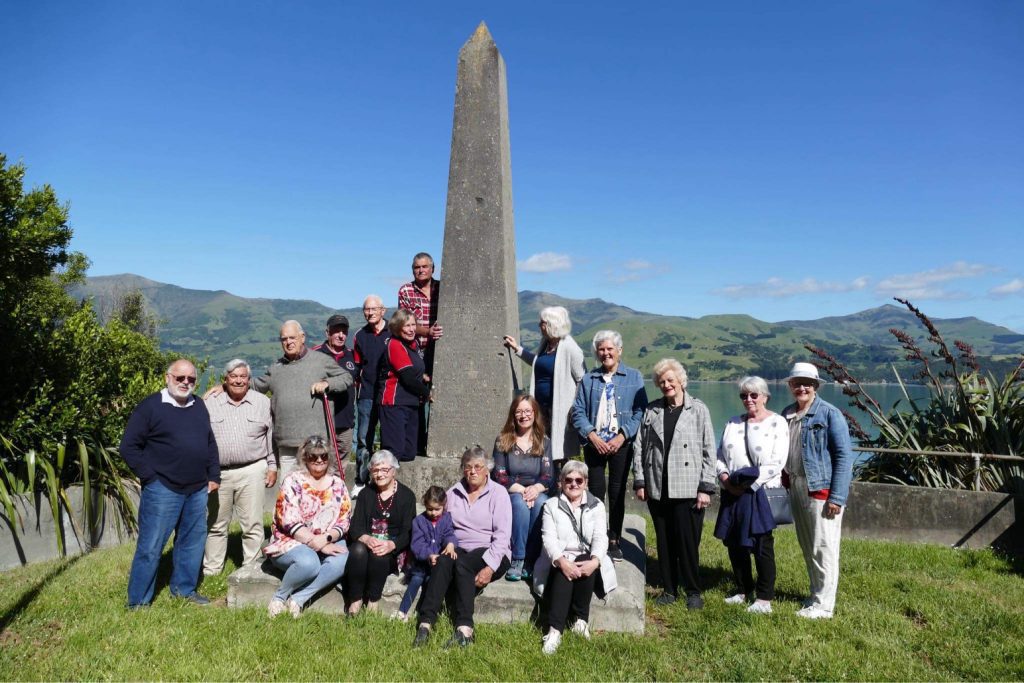
Lavaud negotiated the right for the French settlers to stay and to be granted the land they had been promised under the French settlement company the Nanto Bordelaise Company, leading to the Akaroa French Landing on the 19 August 1840.
My ancestors, who were French settlers on board, established their lives on the shores of Akaroa Harbour. Francois Lelievre had been to Akaroa in 1838, had already built a home and he returned to it. My maternal de Malmanche family arrived for the first time in the Akaroa French Landing in 1840, heavily pregnant she gave birth in a tent on the waterfront to the first European boy born in Canterbury, who was six weeks later, baptised by Bishop Pompallier.

The reenactment for descendants was always a source of pride, a way to honour their ancestors, who had undertaken an arduous journey, but also had the bravery and courage to be on the first French government backed settlement ship to the Pacific and New Zealand.
Some of this courage came from desperation, Rose de Malmanche had already lost two children in France, where living conditions were not good. They came with almost nothing to New Zealand in the hope for a better life, which they built. Relations with local Māori were good, with the de Malmanche family having a Ngāi Tahu family living in their home with them for the first 15 years, this would have led to transfer of culture, language and the ability to trade.
Akaroa French Landing – 4000 people come to Akaroa to honour this important history
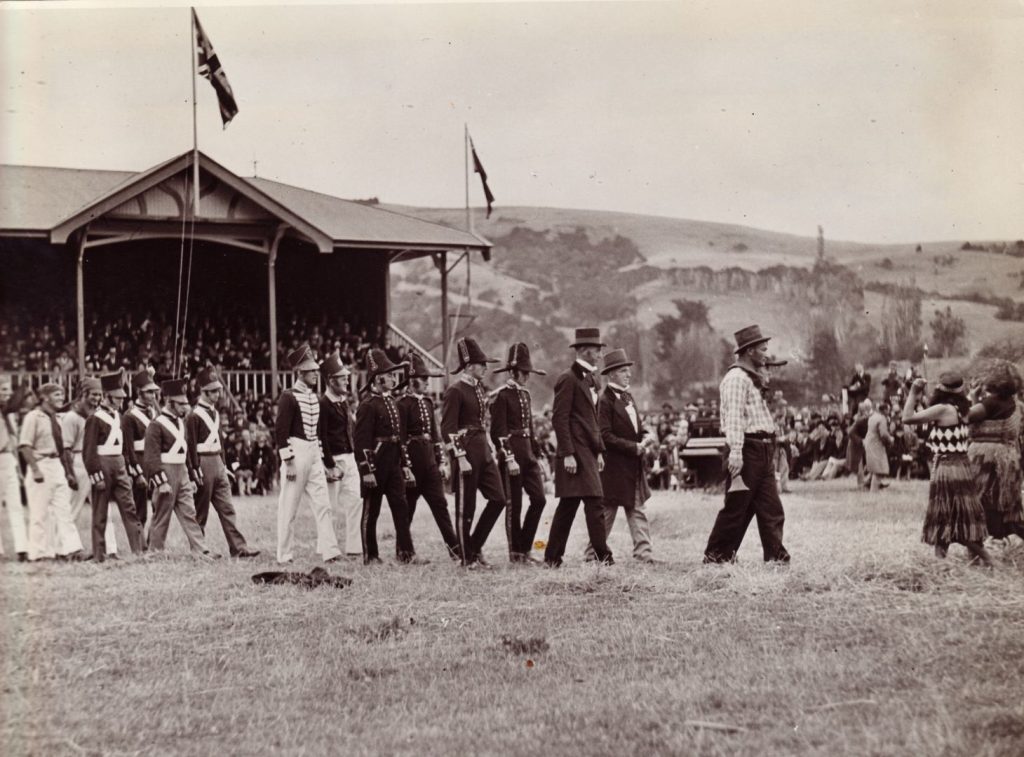
A reenactment of the Akaroa French Landing was part of the events in 1940, as was a special section in the Grandstand on the Recreation Ground for the Comte de Paris descendants. There were speeches and my Great Great Grandfather EX Lelievre spoke (as a 90 year old man) and representative of the French. He hosted the Governor General and Prime Minster at his home on the waterfront, Oinako.
Years later, the Comte de Paris Association started the French Festival both for a tourism drive and to remember the French story of Akaroa, which is completely unique in New Zealand. They included a reenactment again, based upon the 1940 reenactment.
https://christchurchcitylibraries.com/Heritage/Publications/Akaroa/CentennialCelebrations/CentennialCelebrations.pdf