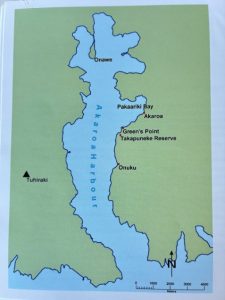
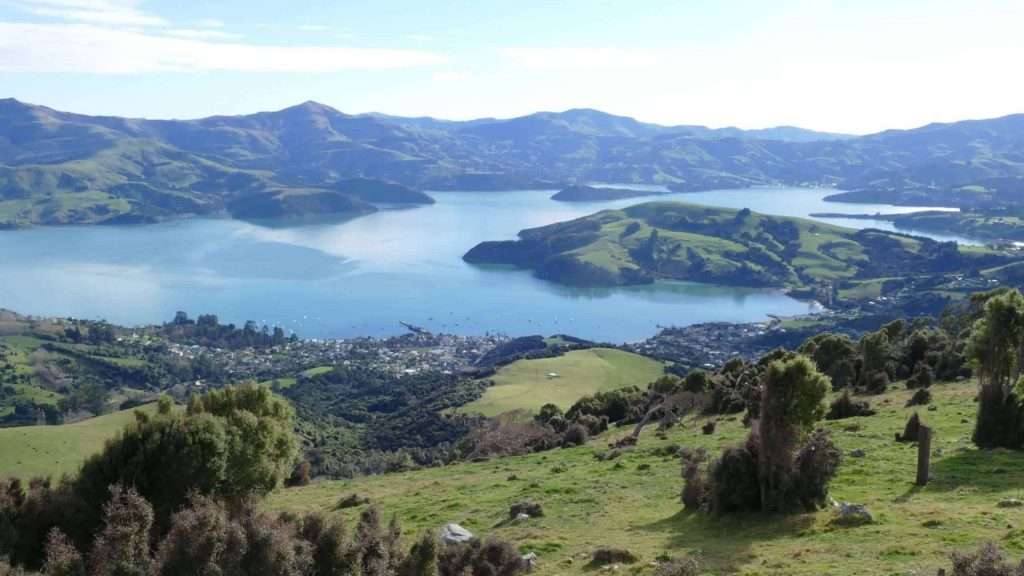
Akaroa Harbour “is one of the most remarkable heritage landscapes in New Zealand. Few other New Zealand landscapes contain within them so many stories that span the full breadth of the country’s history” (Evison and Wilson, Akaroa Civic Trust, 2010).
Akaroa Harbour a heritage landscape
Akaroa Harbour a Heritage Landscape of outstanding significance has not been celebrated as it should, the following post sets out a series of historic sites that demonstrate Akaroa Harbours historic significance:
Akaroa Volcano and Harbour
The significant geological landscape of volcanic origins that sets the scene for the natural history and the human history overlayed on this significant historic landscape.
Settlement occurred in the bays and harbours that could shelter villages and harbour ships.
Akaroa Harbour A Heritage Landscape From Akaroa Civic Trust ‘Takapūneke and Green’s Point 1830-2010
Tuhiraki Mt Bossu
Tuhiraki, later named Mt Bossu (hunchback) by the French, embodies the story of the first Polynesian explorer Rākaihautu, who named the landscape Te Pātaka o Rākaihautū meaning the Foodbasket of Rākaitahtū. This story captures the abundance of nature upon human settlement.
This oral history captures the first Māori settlement in the South Island and the maanaki of the harbour, the abundance and protection.
Akaroa Harbour a Heritage Landscape crosses Māori, British and French international history.
Charles Meryon Akaroa 1845
Takapūneke
A flax trading village that became the scene of the Brig Elizabeth Incident in 1830, where Te Rauparaha and his northern warriors hid aboard the English ship of Captain John Stewart.
The subsequent burning of the kainga and slaughter of its inhabitants was horrific and resulted in British Government discussion of British law extending to New Zealand.
Site of continued inter-tribal warfare which was a continuation of the Musket Wars that had spread throughout the North Island and moved south fuelled by the flax trade.
In 1831 or 1832 Te Rauparaha captured the pā which Ngāi Tahu had constructed in anticipation of his return.
Akaroa had a big impact on New Zealand History
The French Whaling Fleet
The hunting of whales for oil began on Banks Peninsula in the 1830’s with Peraki established as the first shore based whaling station in 1836.
In 1838 the French Whaling fleet arrived to Banks Peninsula and Captain Langois of the Cachelot made a purchase of ‘all of Banks Peninsula’, the agreement did not follow international protocol.
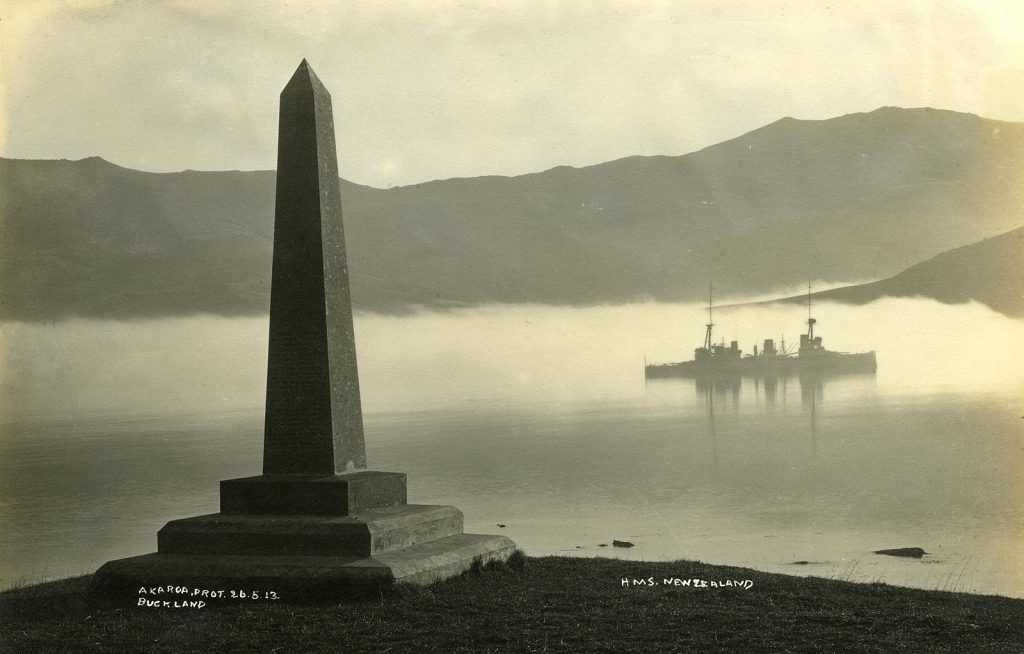
The Britomart Monument ‘ is a unique historic place. The British intervened in New Zealand partly to curb the lawlessness of which the ‘Takapuneke Affair’ of 1830 was the most striking demonstration and partly to thwart the imperial ambitions of the French’
Described by John Wilson as “the best place in New Zealand to discuss the Treaty of Waitangi” “Green’s Point (Britomart Monument) and Takapuneke are together the only place in New Zealand where both parts of the story of the acquisition by Britian of sovereignty over New Zealand can be told exactly where key incidents in that story happened.” (Evison and Wilson, Akaroa Civic Trust, 2010).
Akaroa Harbour a Heritage Landscape that tells the French British Imperial Rivalry and the international story of New Zealand and the Treaty of Waitangi like nowhere else. Read more about Britomart Monument HERE.
Britomart Monument on Observation Point overlooking Akaroa Harbour. Photo by Jesse Buckland.
Like the Bay of Islands, Akaroa played a prominent role in the early contact history of New Zealand. The site of a projected French colony, the town was under the protection of the French Navy for several years.
The registered historic area lies along the waterfront of Akaroa Harbour. The main area comprises all of the Rue Lavaud, part of Beach Road, and includes streets and areas to the east of these two principal roads. From Woodills Road to the Garden of Tane. Including L’Aube Hill Reserve and French Cemetery, Rue Balguerie and Stanley Park. The western boundary is marked by Dalys Wharf at the end of the Rue Balguerie.
Langlois Étévenaux House, Akaroa as shown below is one of the oldest surviving houses in Canterbury and demonstrates the French heritage and style.
Langlois Étévenaux House, Akaroa
French Landing
The landing site of the First Planned European Settlement in the South Island, the ONLY government backed French settlement attempt in New Zealand.
The French landing site has been celebrated with reenactments, mostly notably that of the Centenary Celebrations, where Akaroa was celebrated as the PREMIER historic location in the South Island, due to the story of the British French Imperial Rivalry in claiming the South Island.
The landing site today is marked by the French Flag and commemorative stones and seats. It is where the French raised their tents to begin life in a new land.
When the French settlers landed they erected the sails of the ship for tents.
The Seat of French Government
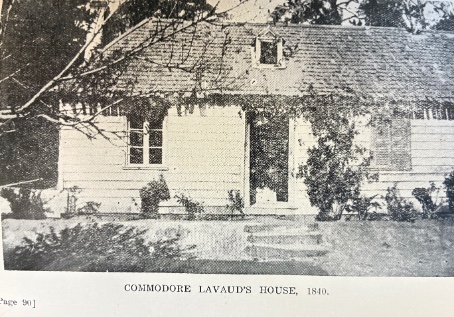
Captain Charles François Lavaud enforced French Law and control over the French settlers and settlement, with his seat of government on the land. CommodoreLavaud’s House is the land known today as the BP Meats Site and Akaroa Butchers Shop.
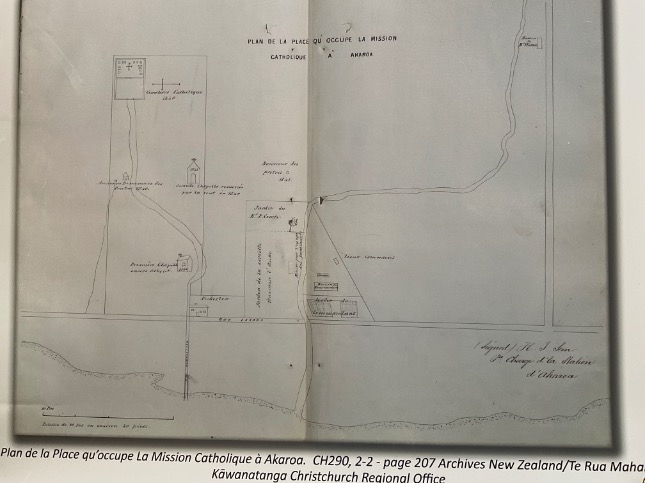
The French Nanto-Bourdelaise Company were allocated 30,000 acres by the Land Courts from the Akaroa Beach to Pigeon Bay, this was sold to the New Zealand Company (Canterbury Association). This land was outside of future Ngāi Tahu land sales.
French settler Etienne Francois Lelievre purchased 50 acres of land from the Canterbury Association including Lavaud’s House, subsequently this was sold to Magistrate Watson. French priests were living in this house, already in a ruinous state, in 1851 when they were evicted by Watson.
Akaroa Harbour a Heritage Landscape that is absolutely distinct and special in New Zealand.
Commodore Lavaud’s House from page 90 ‘Tales of Banks Peninsula’
Map of French Government Land Akaroa
Britomart Reserve
The New Zealand British Colonial Government sent land purchase agent Kemp to Akaroa in 1848 to negotiate the purchase of Ngāi Tahu’s land, this occurred at the park now called the Britomart Reserve by the Main Wharf.
Akaroa Harbour a Heritage Landscape that had major consequences for Māori.
Ironically a British cannon was placed in this park by a French Major, Etienne Xavier Lelievre, son of the original settler who built the second European house and planted the First in Canterbury.
Bishop Pompallier visited Akaroa and consecrated land for the first church to be built in the South Island at the site of the current Saint Patricks’s Church which is the third church, built in 1865.
The first European boy born in Canterbury Charles Joseph Maria de Malmanche was baptised by Pompallier during this visit.
Akaroa Harbour a Heritage Landscape a place of special pilgrimage still today for the Catholic Church in New Zealand. The best place in New Zealand to understand religious rivalry prior to the Treaty.
Memorial of Bishop Pompallier's First Mass in Akaroa
Evidence indicates that it was probably built during 1842 and certainly by 1846 when the French navy ceased their supporting role. It is one of the oldest buildings in Canterbury.